Environmental Protection
City of Riverside v. Ruckelshaus
Case Summary
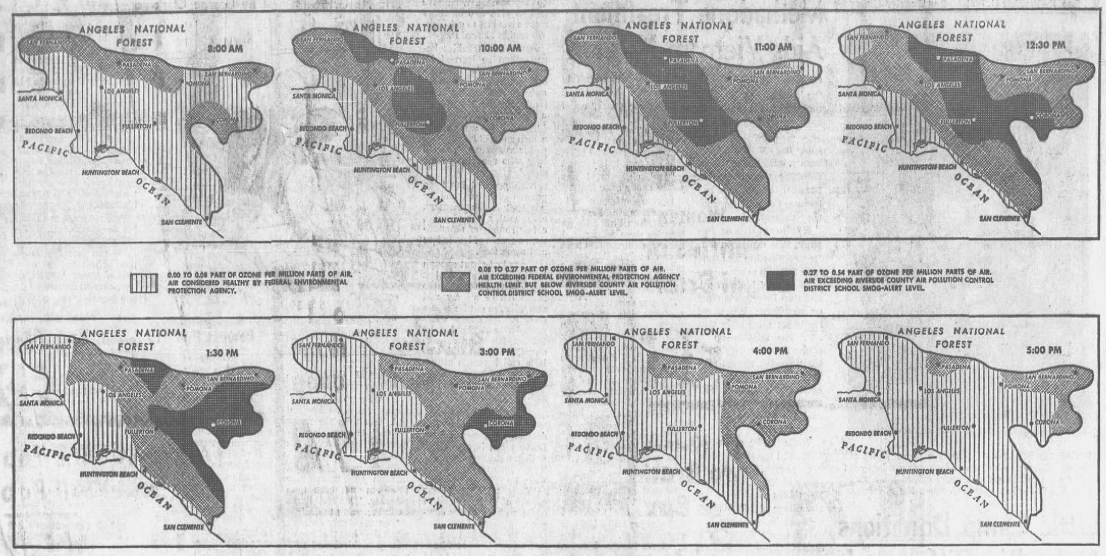
When the Environmental Protection Agency approved California’s vague, illusory air quality improvement plan for the LA air basin, the US District Court ordered the EPA to prepare a substitute federal plan by which the LA Air Basin would meet rigorous Clean Air Act standards despite the practical and political difficulty and the expense of attainment.
Additional Information
The federal Clean Air Act mandates that each state must prepare detailed plans for how each air basin within the state will achieve nationally established air quality standards based on levels needed to protect human health. Because Los Angeles has consistently had the worst air quality in the nation, the difficulties of achieving these legislative goals has greatly compounded. As a result, our state and local agencies in charge of complying with these legislative mandates have sometimes failed to have the political will to pursue the needed remedies
CLIPI filed several lawsuits in the 1970s and ‘80s to enforce the Clean Air Act mandates. Doubtless the most visible of these cases was City of Riverside v. Ruckelshaus, which resulted in the first federal district court mandate requiring air quality officials to prepare appropriate plans to achieve CAA air quality standards. To comply with this judicial mandate, air quality officials initially promulgated plans for car-pooling, gas rationing and other politically unpopular strategies, and Congress soon intervened to modify the mandates so as to avoid political backlash. The Ruckelshaus case nonetheless showed that citizen litigation would be an important tool in achieving the clean-up of our air resources, and it educated the public that meeting these important legislative goals would require strong actions.
One subsequent suit, California Lung Association v. Air Resources Board, resulted in a federal district court mandate ordering LA basin air quality officials to prepare plans for smog emergency air pollution episodes, when air pollution reaches levels dangerous to human health. Notably, in the ensuing years, Clean Air implementation efforts in the Los Angeles basin have been so successful that emergency episodes have virtually disappeared. In fact, air quality in the Los Angeles basin has improved significantly in the past twenty years, due in substantial part to the citizen lawsuits that have consistently enforced the Clean Air Act’s important legislative aspirations.
(Published in the 30th Anniversary of CLIPI Dinner Program)
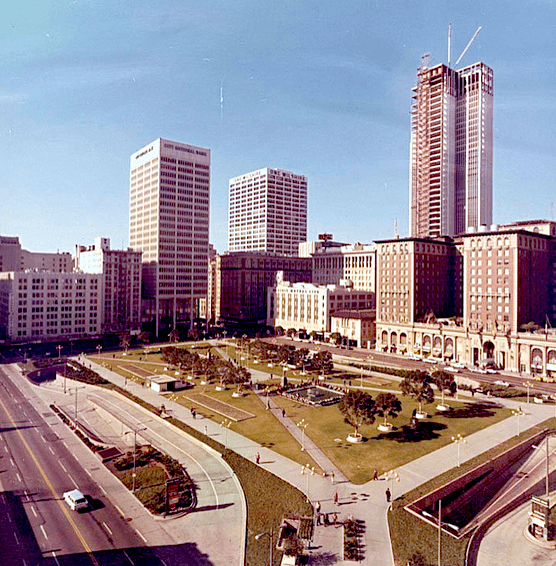
LA Conservancy v. Los Angeles Community Redevelopment Pershing Square
Blocked selling park “air rights” for taller skyscrapers, protecting Pershing Square as vital downtown open space.
Read Story
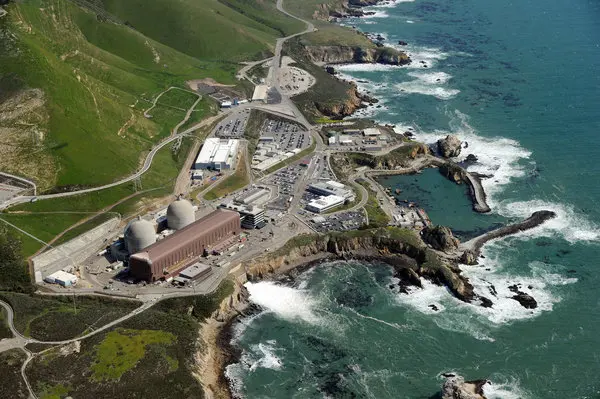
Pacific Gas and Electric Co. (Diablo Canyon Nuclear Power Plant Litigation)
Fought licensing for a plant proposed to be near major seismic fault, boosting the importance of nuclear safety standards for decades.
Read Story

Friends of Ballona Wetlands v. California Coastal Commission
Blocked massive coastal development to preserve LA’s last major wetland ecosystem.
Read Story