
Government and Corporate Reform
False Claims Act
Case Summary
CLIPI’s trailblazing work on FCA legislation reforms to facilitate whistleblower claims that individuals or companies have defrauded the U.S. government, and allowing whistleblowers to obtain a part of the government’s recovery were embodied in the 1986 amendments to the Act, of which CLIPI authored and were key proponents. These amendments provide financial incentives to encourage people to report fraud and overcharges by guaranteeing “whistleblowers” between 15 and 30 percent of the amount the government recovers. CLIPI’s ground-breaking FCA cases — the first filed under the new FCA amendment — ultimately recover millions of dollars of overcharges to the federal treasury; to date, FCA recoveries nationwide on behalf of the federal government under the new FCA provisions have totaled well over $40 billion, while whistleblowers who have pursued such “qui tam” actions have recovered nearly $350 million.
Additional Information
The False Claims Act, called the "Lincoln Law," was originally passed because businessmen were defrauding the Union Army by cutting gunpowder with sawdust and selling the same horses over and over to the cavalry. Over the years, its effectiveness was undermined by a series of court decisions, but a rash of highly publicized overcharges during the Reagan Administration, such as the sale of $500 hammers and coffee pots to the armed forces, stimulated widespread interest in reviving the law. The 1986 amendments to the Act, of which CLIPI was the author and key proponent, provide financial incentives to encourage people to report fraud and overcharges by guaranteeing "whistleblowers" between 15% and 30% of the amount the government recovers.
CLIPI initiated the first three qui tam cases in the nation under the newly amended False Claims Act. CLIPI alleged that Teledyne, Litton Computer Systems and the Singer Company had overcharged the federal government for military-related goods and services. CLIPI's pioneering FCA cases ultimately recovered millions of dollars of overcharges to the federal treasury. Subsequently, the private bar has successfully litigated qui tam recoveries that now exceed $40 billion.

Keith v. Volpe (Century Freeway)
Halted freeway construction until plans included transit upgrades, for thousands of affordable homes and jobs for impacted communities.
Read Story

Springer v. Jones (Northrop)
Exposed Northrop’s global bribery practices, helping drive passage of the Foreign Corrupt Practices Act.
Read Story
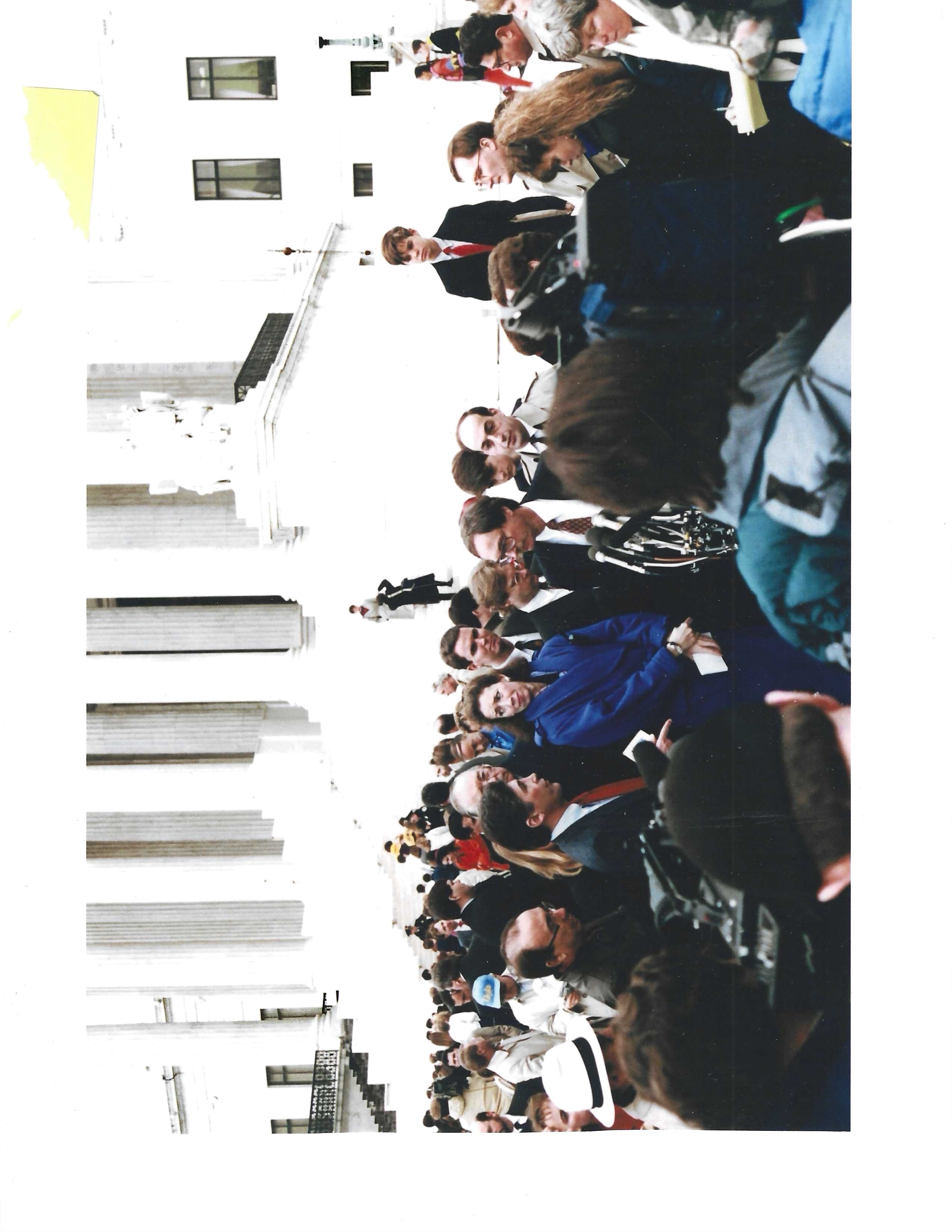
Nordlinger v. Hahn
Challenged Prop 13’s tax rules favoring longtime owners over new buyers, highlighting unequal treatment.
Read Story