Civil Rights and Civil Liberties
Sundance v. Municipal Court
Case Summary
California Supreme Court affirms Superior Court’s ruling that LAPD mass arrest and incarceration practices of public inebriates—which then totaled more than 50,000 arrests annually and was the highest volume “crime” in California—routinely violated the due process rights of publicly intoxicated individuals; Court orders comprehensive reforms of LAPD arrest and incarceration practices and of Municipal Court’s public inebriate arraignment and sentencing practices; CLIPI works with local charitable community to create civil detoxification and rehabilitation facilities, including the Weingart Center in LA downtown’s Skid Row.
Additional Information
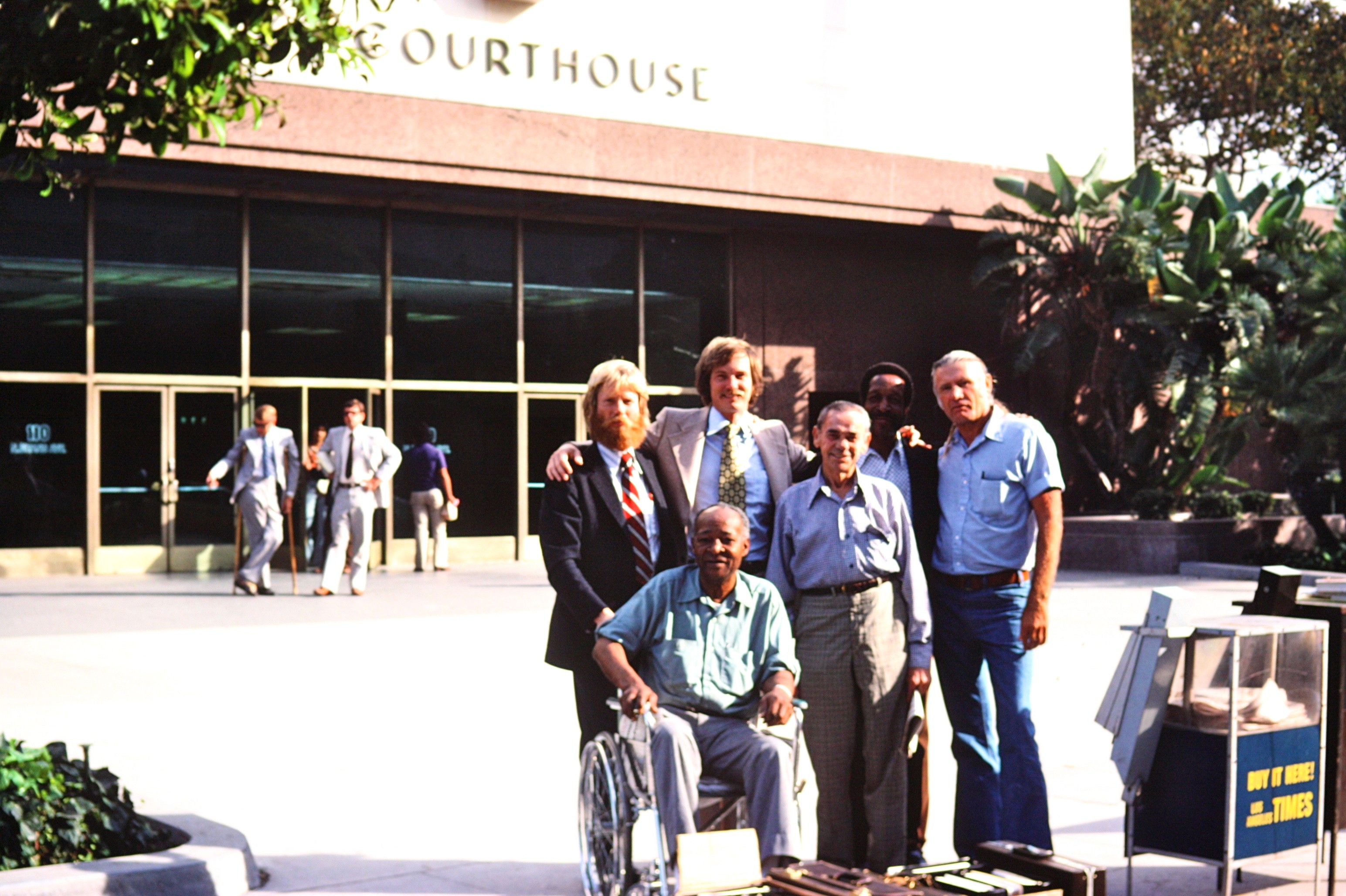
Robert Sundance was a skidrow drunk. By 1970, he had been arrested 300 times for public drunkenness in Los Angeles. During his periodic stays in the drunk tank, this son of a Sioux chief would read books from the jail library. He learned that the medical community regarded his condition of alcoholism as a disease. In another book, he learned that at least one U.S. Supreme Court judge had found judicial treatment of homeless chronic alcoholics as a form of unconstitutional “cruel and unusual” punishment.
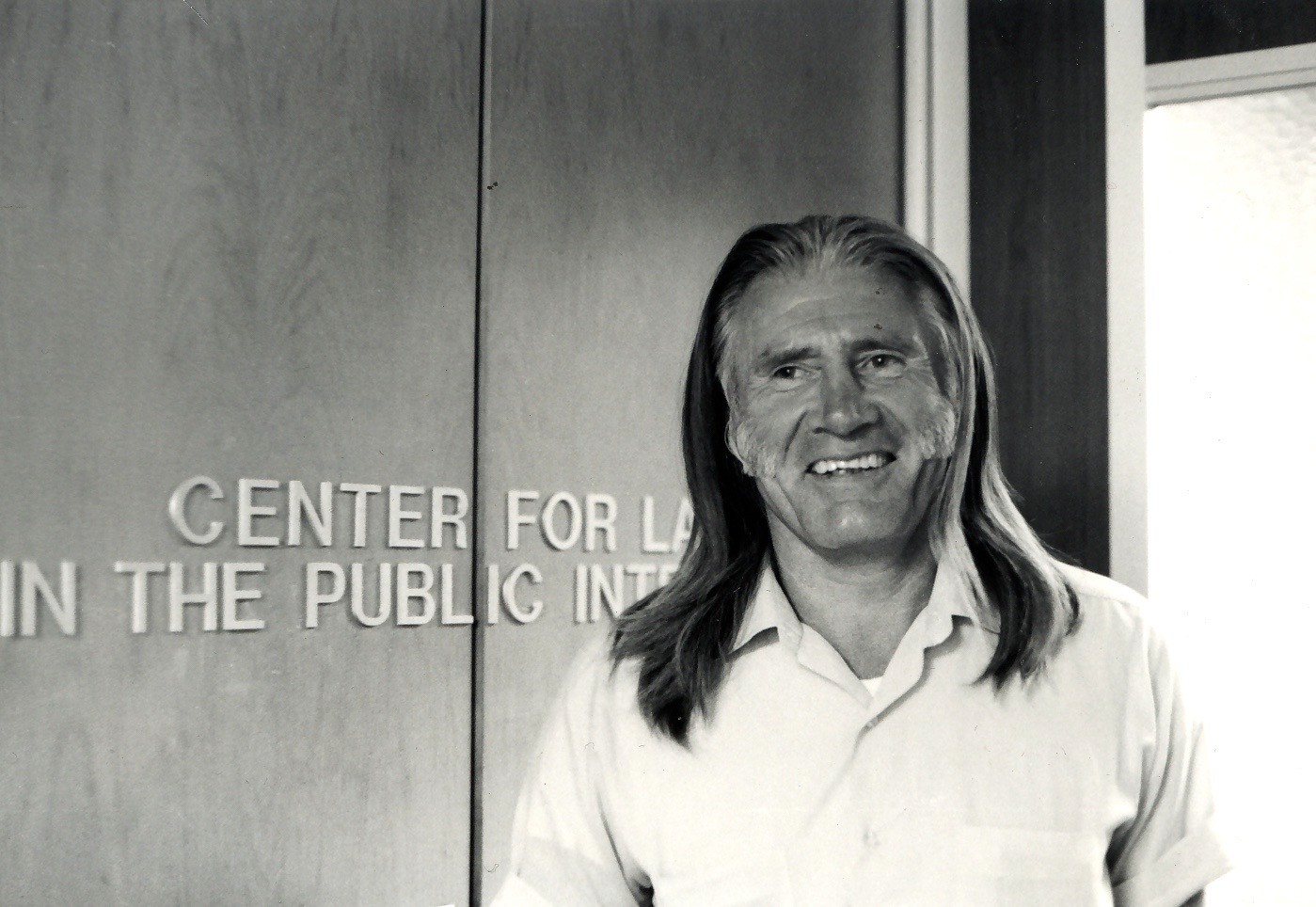
He repeatedly pled “not guilty” in order to get a trial in which he could raise a constitutional challenge to his arrest. Finally, in a handwritten petition to Federal District Judge Warren Ferguson, Sundance asked him to order a trial to challenge his latest re-arrest. Instead, Ferguson sent the petition to CLIPI, which had just completed its Northrop litigation in front of him. Center lawyers began to research the questions being raised by Sundance. They found that public intoxication was the highest volume crime in the Los Angeles Judicial District, with approximately 50,000 arrests annually, mainly in LA downtown’s skidrow area.
LAPD routinely jammed up to 200 inebriates a day into dangerous “B-wagons” and transported them to crowded, barbaric “drunk tanks” without adequate medical treatment or supervision. When brought to court the next day, the “drunk court” judge would give them a choice: plead “guilty” and be released in one or two days or plead “not guilty” and remain in jail for 30 days awaiting trial. Almost 99% pleaded guilty. Some repeat inebriates were serving up to 325 days a year in jail. For the handful who pled “not guilty, on the day set for trial, the charges would routinely be dismissed “in the interests of justice” because, among other things, the arresting officer would not show up in court. Accordingly, in the year before CLIPI initiated the Sundance case, despite 50,000 arrests, not a single trial was held.
Little use was being made of a Penal Code option to divert inebriates out of the criminal justice system to civil detoxification facilities. Such diversion could be more beneficial for inebriates and offer potential rehabilitation treatment and, according to unchallenged testimony by CLIPI’s economic expert witnesses, would be far cheaper for taxpayers – some $3 million a year compared to the $139 million a year spent to arrest and re-arrest public inebriates.
In 1975, the Center filed a class action lawsuit challenging the system on behalf of the public inebriates arrestee class, with Sundance as lead plaintiff. After an eight week trial, Los Angeles Superior Court Judge Harry Hupp ruled that the existing system was imbedded with deeply flawed due process violations and that the drunk tanks and B-wagons did not meet constitutionally minimal standards. The Judge also found that the civil detox alternative was undoubtedly a more effective, less costly approach. The California Supreme Court upheld Judge Hupp’s rulings, although it refused to rule that arrests for public inebriation per se constituted “cruel and unusual” punishment.

So that police officials could begin utilizing the civil detox alternative, CLIPI lawyers took the lead in persuading local foundations, including the Weingart Foundation, to partner with the Community Redevelopment Agency to fund civil detox and rehab facilities in the downtown skid row area. Today, less than 300 public inebriates a year are being arrested by Los Angeles police. One rehab facility, the Weingart Center, has become a nationally famous leader in alcoholism treatment.
At the start of the litigation that bore his name, Sundance continued to excessively drink alcohol. While in jail, he would try to deal with withdrawal symptoms (like the DTs) by reciting to himself the U.S. Constitution. After one re-arrest, he entered a detox facility and then enrolled in a rehabilitation program. After some 40 years of heavy drinking, he finally was able to get “on the wagon.” He was appointed head of the Los Angeles County Commission on Indian Alcoholism and continued to serve until he died of cancer.
Citations
Primary filings, orders, and opinions that shaped the outcome.
In The News
Headlines and reportage that documented the case’s impact.
Public Interest Briefs
Internal updates that recorded progress at the time.

Springer v. Jones (Northrop)
Exposed Northrop’s global bribery practices, helping drive passage of the Foreign Corrupt Practices Act.
Read Story

State of California v. Levi Strauss, Inc.
Created consumer trust funds as a legal basis to more efficiently distribute class action damages through nonprofit grants benefiting victims.
Read Story

Friends of Mammoth v. Mono County Board of Supervisors
Forced agencies to prepare environmental impact reports before greenlighting potentially harmful private development projects.
Read Story